



Global medicine manufacturers gathered in Warsaw this week to discuss the contribution of the generic, biosimilar and value added medicines to patient access and durable healthcare systems around the world.
Delivering access is at the core of the off patent sector. Generic medicines provide for 67% of dispensed medicines in Europe alone and have doubled access to medicines for patients with diabetes or cardiac conditions.
 In an era of growing incidence rates of chronic diseases, global competition, and digitalisation, the sustainability of the industry cannot be left behind if the sector is to continue providing benefits for public health and the sustainability of healthcare systems. Our call is for access-focused pharmaceutical policies, efficient international regulatory cooperation, fostering the use of biosimilar medicines, and facilitating continuous innovation for value added medicines. These are some of the pathways to deliver better healthcare globally.
Medicines for Europe President Marc-Alexander Mahl commented “We are committed to delivering better patient access to medicines. Industry and stakeholders need clear access-focused policies to ensure that the generic, biosimilar and value added medicines can continue delivering on public health. I look forward to working with the newly elected European Parliament and the incoming European Commission to achieve this.”
Jim Keon, Chair of the International Generic and Biosimilar medicines Association (IGBA) commented “Developing international frameworks supporting true global development for generic and biosimilar medicines, a more competitive business environment for the off-patent sector around the globe as well as promoting the implementation of balanced, well-functioning and transparent intellectual property systems in all jurisdictions are essential to support equity of access to healthcare and the UN Member States vision of Universal Health Coverage (UHC) by 2030.”
The European Parliament today voted overwhelmingly with 572 Members of Parliament in favour to adopt the Supplementary Protection Certificate (SPC) manufacturing waiver. The SPC manufacturing waiver is now expected to be formally adopted by the European Council in the coming weeks.
Medicines for Europe commends the EU institutions for successfully concluding this important step in the adoption of the waiver. We congratulate the European Commission for proposing the waiver and the rapporteurs and shadow rapporteurs of the Legal, Trade and Health committees of the European Parliament as well as the European Council for substantially improving the manufacturing waiver to deliver access to medicines for European patients.
The SPC manufacturing waiver will enable the European pharmaceutical industry to compete on a level playing field globally for manufacturing opportunities in generic and biosimilar medicines which is growing year on year.
The waiver will come into force in July 2019 and companies will be able to start manufacturing under the waiver from July 2022. The Commission has evaluated the tremendous investments in new, high-skill jobs that this manufacturing for export and for day 1 launch can deliver for Europe[1]. The waiver’s notification measures should therefore not be misused to block generic and biosimilar medicines competition.
Adrian van den Hoven, Director General of Medicines for Europe commented “Today’s vote on the SPC manufacturing waiver reflects the EU’s commitment to access to medicines, manufacturing jobs in Europe and putting EU industry on a level playing field globally. Europe has everything to gain from fully implementing the waiver to enable more competition on the pharmaceutical market and to improve its own security of medicines supply.”
Medicines for Europe has launched its vision for pharmaceutical policy ahead of the European elections. ‘Together for Health’ outlines the generic, biosimilar and value added medicines industry’s commitment to sustainable access to healthcare for all patients across Europe. The campaign is designed around four key pillars:
Commenting on the launch of ‘Together for Health’, Medicines for Europe Director General Adrian van den Hoven said “the EU elections are an opportunity to improve to healthcare across Europe. The EU can do more to ensure equitable access to medicines for patients for all Europeans. Our industry is ready to engage with the EU, national governments and stakeholders to make this happen.”
To view our policy priorities, please visit www.medicinesforeurope.com/together4health
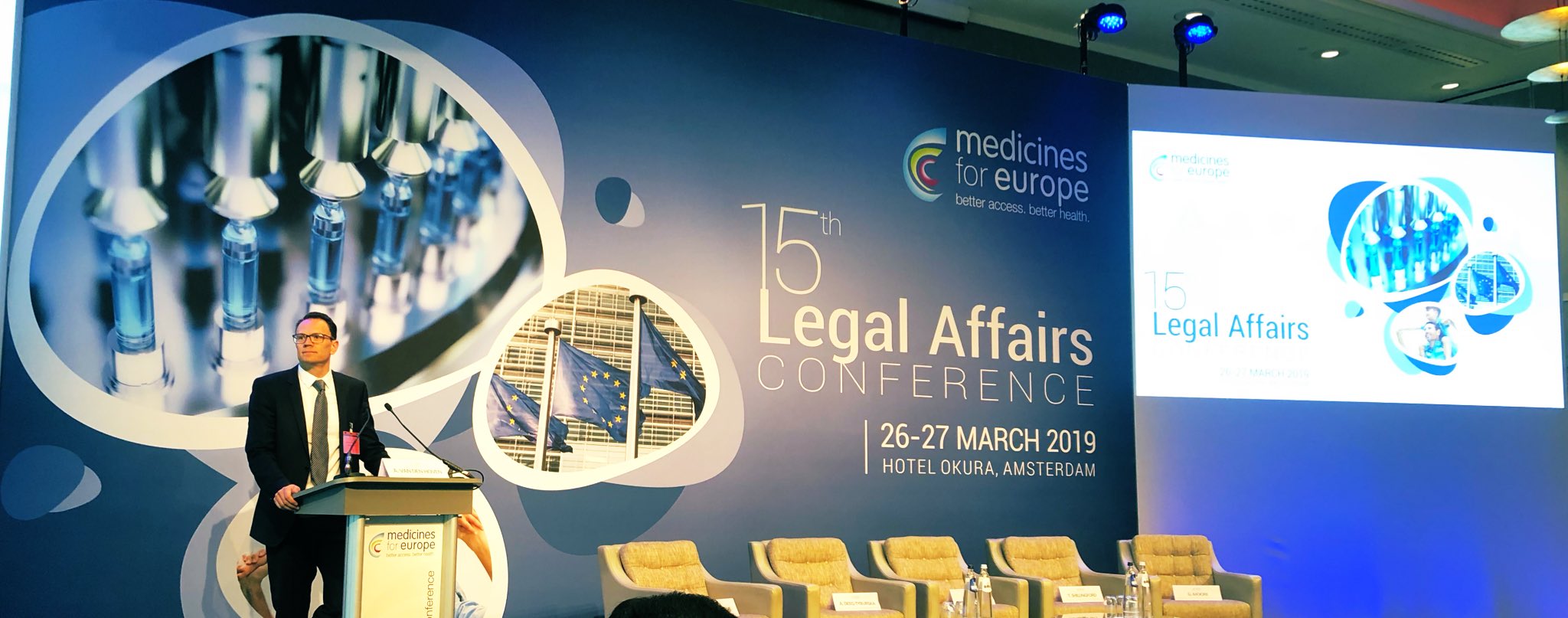
The SPC manufacturing waiver, which will put an end to the legal requirement to delocalise pharmaceutical production outside of Europe, was lauded as a positive step for competition and security of supply of medicines at the 15th Legal Affairs conference in Amsterdam.
Stakeholders, government representatives, lawyers and industry experts took stock of the ten year anniversary of the EU Pharmaceutical Sector Enquiry at the event. Experts expressed major concerns that patent linkage continues to be a barrier to competition and timely access to generic and biosimilar medicines in several Member States despite the clear decision 10 years ago to ban this anti-competitive practice as a conclusion of the Enquiry.
Experts also questioned why the European patent system has failed to address documented problems with patent quality in relation to the pharmaceutical sector. Failing to address this issue undermines the credibility of the system and risks delaying access to medicines.
Experts also exchanged best practice in litigation strategies to promote greater access to biosimilar medicines at expiry.
Sergio Napolitano, Legal and External Affairs Director at Medicines for Europe commented “. EU Governments rely more and more on generic and biosimilar medicines to ensure equity of access to medicines for patients. It is essential to ensure that the patent system and regulatory incentives for pharmaceuticals do not unduly delay access to medicines for patients. The SPC manufacturing waiver shows that the EU can easily tailor regulatory incentives to favour access and growth in Europe while maintaining strong incentives for the originator industry.”
Today, the European Council, Parliament and Commission agreed a compromise deal on the SPC manufacturing waiver which will allow the co-legislators to adopt the amendment to the SPC Regulation under the current legislature.
The SPC manufacturing waiver will contribute to better patient access, to create manufacturing opportunity and jobs and to increase Europe’s capacity to manufacture and supply its own medicines. Medicines for Europe thanks the EU for addressing many of its proposals for a comprehensive waiver including the possibility to manufacture for export and day 1 launch and a balanced date of applicability. The compromise foresees a review in five years, specifically of the day 1 launch duration, which provides us with an opportunity to assess its benefits.
Recognising the complex legal nature of the SPC manufacturing waiver, we thank the many European Parliamentary, Council, Commission and national representatives who engaged thoughtfully with our industry and with stakeholders to move this legislation to a conclusion based on the benefits for Europe.
We deeply regret that the manufacturing waiver includes unnecessary and redundant notification requirements. This will require generic and biosimilar medicines manufacturers to publish commercially confidential information to allegedly prevent our industry from circumventing the rules of the waiver – notably the re-import of medicines manufactured under the export waiver for day 1 launch. This is obviously redundant now that the manufacturing waiver also authorises its use for day 1 launch manufacturing.
Medicines for Europe therefore calls on authorities to closely monitor any potential misuse of the notification system for frivolous litigation which could delay competition from generic and biosimilar manufacturers in markets where SPCs have expired.
We now call on the Parliament and the Council to rapidly adopt the SPC manufacturing waiver and look forward to strengthening Europe’s pharmaceutical manufacturing for access, jobs and growth.
The EU Falsified Medicines Directive was adopted in 2011 to prevent falsified medicines from reaching patients in Europe. Following lengthy discussions on the technical requirements to serialise between 10 and 14 billion packs of medicine every year, the system will start functioning across Europe as of the 9th February.
Prescription medicines in hospitals and pharmacies (the ‘legal supply chain’) must bear a 2-D datamatrix and anti-tampering device to enable pharmacists to verify their authenticity.
For the generic industry, which supplies over 67% of prescription medicines, this project was a massive undertaking from a manufacturing, IT and regulatory perspective. Medicines for Europe commends our manufacturers and the associations which have set up the European and national IT hubs (EMVO & NMVOs) for their incredible commitment to deliver this project on schedule. Medicines for Europe looks forward to strong cooperation with stakeholders and partners (other industry associations, wholesalers and pharmacists) to iron out the last of the technical challenges associated with this IT megaproject during the stabilisation period.
The industry funded system has required an investment of over 1 billion euros from manufacturers to update production and packaging lines and will require a further 100-200 million euros annually to maintain the IT infrastructure. These costs simply cannot be absorbed for the majority of generic medicines on the EU market. Consequently, Medicines for Europe will call on national authorities to review the sustainability of supplying Europe’s essential medicines at very low cost while having to invest in massive regulatory compliance projects like FMD.
Adrian van den Hoven, Director General of Medicines for Europe says: “Medicines for Europe congratulates our member companies, fellow industry and supply chain partners and EMVO/NMVOs for their incredible effort to make FMD operational on time. This is a massive undertaking and we are committed to stabilising this important system for patient safety with our partners over the next few months. The financial investment by our members has been astronomical and this poses a particular challenge to the sustainability of the generic medicines sector. Industry and authorities need to have a focused dialogue to ensure patient access to essential medicines is not jeopardised in the future. This kind of dialogue should urgently take place for our members to be able to support long-term sustainability of European healthcare systems and continue to deliver on better health for patients.”
Medicines for Europe calls on the European Council, Parliament and Commission to resist pressure from foreign vested interests to derail the adoption of the Supplementary Protection Certificate (SPC) manufacturing waiver. All parties involved in these discussions are well aware that these foreign vested interests fear the competition from EU biosimilar medicines manufacturers where we have been pioneers and technology leaders in bringing access to biological medicines for patients.
The purpose of the manufacturing waiver is to stop the forced delocalisation of medicines manufacturing outside of Europe while stimulating greater access to medicines at expiry of the SPC. Following thorough discussions with all concerned parties and stakeholders, the Council and Parliament have adopted sound trialogue negotiating mandates to successfully adopt the waiver within this legislature.
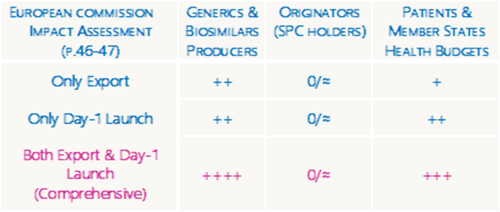
The Parliament’s support for EU day-1 launch stockpiling is fully consistent with the data in the Commission impact assessment and related Charles River Associates study and is widely supported by stakeholders in the healthcare community responsible for access to medicines. The same impact assessment and study evaluates the impact on the originator industry to be “0”, as originators would maintain their up-to-five years of extra monopoly after patent expiry granted by the SPC. The impact assessment states: “An SPC manufacturing waiver for export and stockpiling would be the most effective and simplest option” (EC Impact Assessment, p.105).
Medicines for Europe would like to underscore that equitable access to medicines remains a major challenge for Europe. Therefore, all policies like the SPC manufacturing waiver which can improve our economy, our security of medicines supply and more sustainable healthcare budgets should be welcomed.
Commenting on the situation, Adrian van den Hoven, Director General at Medicines for Europe stated “The SPC manufacturing waiver will bring tremendous benefits to Europe in terms of manufacturing, jobs and medicines access with no demonstrable downsides. Foreign vested interests should not be allowed to interfere in a transparent EU legislative process where all stakeholders were consulted and involved. The future of Europe’s medicines supply is dependent on this EU decision and we trust in the resolve of our democracy to do what is right for Europe.”
This table summarises the assessment made by the Commission on stockpiling at pages 46-47 of the Impact Assessment (link to impact assessment: https://ec.europa.eu/docsroom/documents/29463)
This week in London, Medicines for Europe gathers regulators and industry leaders to discuss the future of regulation of generic, biosimilar and value added medicines industries.
Our industries, which supply 67% of Europe’s medicines, face an unprecedented set of regulatory challenges in the year ahead. With less than two months to adapt to the UK withdrawal from the European Union, we renew our calls for a clear contingency plan. Pragmatic solutions are needed to avoid medicine supply disruptions as companies finalise the process of separating UK and EU activities. New regulatory requirements including the Falsified Medicines Directive and extended requirements for environmental risk assessment need to be implemented thoughtfully in partnership between industry and regulatory authorities. This will help avoid disproportionate impacts on essential medicines that the majority of European patients rely on.
The EU must seize the opportunity to lead in international regulatory cooperation for the global development of complex medicines. Similarly, the EU’s ability to align with partners such as the US Food and Drug Administration (FDA) on Good Manufacturing Practice (GMP) mutual recognition offers the possibility to strengthen the oversight of global manufacturing supply chains. Digital tools like electronic patient information leaflets (‘e-leaflet’) need to be leveraged to improve the flow of information to patients and eliminate the vast complexity of updating paper leaflets in over 20 languages across the EU.
Marc Alexander Mahl, Medicines for Europe President commented: “The dialogue between industry and regulators to optimise the regulation of pharmaceuticals is an essential part of access to medicines. We need to take material steps forward to grasp the opportunities in areas like e-leaflets and global development while carefully managing disrupters such as Brexit. ”