



Key authorities, eminent lawyers and industry leaders discussed today in London the proposals put forward by the European Commission to stimulate jobs and growth in the pharmaceutical sector in Europe at the Medicines for Europe 13th Legal Affairs Conference. The high level participation at the event was crucial to advance discussions on key legal and IP topics impacting the generic, biosimilar and value added medicines industries.
This year’s conference addressed fundamental issues such as the consequences of the EU Health Council Conclusions of June 2016 calling for a review of pharmaceutical incentives, the impact of Brexit on the industry, antitrust developments, SPC case law, as well as interactive roundtables on the Unified Patent Court, orphan drugs, second medical use patents, clinical trial transparency, grace periods, the industry Code of Conduct, compulsory licenses, the Falsified Medicines Directive, EPO developments and data protection. The Commission proposal for an SPC manufacturing waiver for pharmaceutical production and R&D in Europe and to foster high-skill job creation and economic growth was discussed in depth.
“Today’s conference provides pathways to encourage competition, innovation and growth in the pharmaceutical sector. Patients, governments and healthcare systems rely on a strong generic, biosimilar and value added medicines industry to increase access to medicines and to create jobs for Europe”, commented Sergio Napolitano, Legal Affairs Director at Medicines for Europe, speaking ahead of the 13th Legal Affairs Conference, “an adapted legal environment that includes the SPC manufacturing waiver will boost investments in our sector and we stand ready to support job creation measures”.
The harmonisation of different regulatory environments in the EU member states will help generic drugs enter the market, resulting in reduced prices for medicine and better patient access, Jacek Glinka told EURACTIV.com in an interview.
Jacek Glinka is the president of the Medicines for Europe, which represents the European generic, biosimilar and valued added pharmaceutical industries.
He spoke with EURACTIV.com’s Sarantis Michalopoulos and Hannah Black.
Today, the European Parliament voted on the report on ‘Options for improving access to medicines’ that places generic, biosimilar and value added medicines at the heart of the debate on access to medicines. Together with the June 2016 Council Conclusions, this report provides the Commission and the Member States with a clear mandate to encourage more competition from generic and biosimilar medicines, underlining that generic medicines are a cornerstone of European healthcare, and biosimilar medicines offer tremendous opportunity for access to biotherapies.
The report also recognises the innovation in the off-patent sector as it can be beneficial for patients and deliver added value (hence value added medicines). These types of medicines will help address major healthcare challenges such as delivering better adherence and quality of life as well as better safety and efficacy and their benefits should be assessed.
“We urge the Commission and Member States to take action to ensure that these proposals are translated into real support measures for generic, biosimilar and value added medicines, allowing all patients across Europe to get access to the treatment they need” commented Adrian van den Hoven, Medicines for Europe Director General.
MEPs are also reiterating the call on the European Commission to stimulate manufacturing and export of generic and biosimilar medicines to countries where no patent or Supplementary Protection Certificate (SPC) exists. A manufacturing waiver for generic and biosimilar medicines during the SPC period will increase access to high quality medicines in unprotected markets, without changing the equilibrium between the originator and the generic and biosimilar medicines industries in the EU.
Europe is the cradle of the manufacturing industry and has been at the forefront of industrial revolutions and technological innovations. The industry directly employs over 34 million people across all Member States, in supply chains comprising hundreds of thousands of SMEs and larger suppliers. It also indirectly accounts for millions of additional jobs in related sectors.
The European manufacturing industry has tremendous capacity for research and innovation, boasts a skilled workforce and has earned a global reputation for quality and sustainability. What it now needs is the swift and determined support of the European institutions and the Member States to create more jobs and growth in Europe.
The time has come to raise the alarm about the considerable challenges that we are all facing. Between 2000 and 2014, the share of manufacturing in total EU output fell from 18.8% to 15.3%, while 3.5 million manufacturing jobs were lost between 2008 and 2014. Meanwhile, countries around the world are putting industry at the very top of their political agendas. The “Make in India” strategy aims to ensure India is “the next manufacturing destination” and “Made in China 2025” seeks to turn China into the “leading manufacturing power”. The recent US shift towards “America First” will inevitably have a strong impact on their industrial policy.
At the beginning of his mandate, European Commission President Jean-Claude Juncker identified the reindustrialisation of Europe as one of his top priorities and confirmed the objective of increasing the share of industry in the European GDP to 20% by 2020. As we approach the preparation of the next Multiannual Financial Framework, it is vital for the European Commission to act and help the EU remain a competitive global industrial power playing in a fairer world market.
Therefore we, the European manufacturing industry, representing a diverse range of sectors, call on the European Commission to:
Member States and the European Parliament clearly stated their full support for a strong European industrial strategy via the European Council Conclusions calling to strengthen and modernise the EU’s industrial base (15 December 2016) and the Parliament Resolution on the need for a European reindustrialisation policy (5 October 2016).
We, the Signatories of this Joint Declaration, are ready to step up our cooperation with the European Commission, the European Parliament and the Competitiveness Council to define and implement this ambitious and coordinated European industrial strategy that will help safeguard the world leadership of European manufacturers and jobs in Europe.
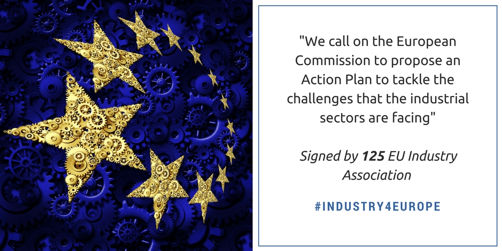
See the full Joint Declaration for an ambitious EU industrial strategy
Medicines for Europe welcomes the approval by the European Parliament of the EU and Canada Comprehensive Economic and Trade Agreement (CETA) that can be an opportunity for medicine manufacturers in the two regions. The Medicines for Europe trade agenda works to promote access for patients to high quality medicines around the world. The CETA has the potential to strengthen the European manufacturing base of the generic, biosimilar and value added medicines industries, which are investing in existing and new manufacturing plants across Europe.
The CETA includes a Supplementary Protection Certificate (SPC) protection in Canada, which extends market exclusivity for originator industries for regulatory marketing approval delays. It also provides for an SPC manufacturing waiver, which the European Commission is planning to implement in the context of its Single Market Strategy. Once introduced, the SPC manufacturing waiver will create over 60000 new export-related jobs in the generic and biosimilar medicines sector while boosting our capacity to supply cost-competitive medicines in Europe and abroad. Medicines for Europe calls on the European Commission to rapidly seize this historic opportunity to increase manufacturing growth and employment in the pharmaceutical sector by introducing the SPC manufacturing waiver foreseen by the CETA.
“Generic and biosimilar medicines will represent 80% of the volume of medicines by 2020. If Europe wants to keep a strong pharmaceutical manufacturing sector, it needs to adopt the SPC manufacturing waiver now”, commented Adrian van den Hoven, Medicines for Europe Director General.
The European associations representing manufacturers of medicinal products, parallel distributors, pharmaceutical wholesalers and pharmacists have announced a series of recommendations on the provision of information, designed to help tackle medicines shortages.
Focusing on the transparency and the availability of medicine shortage data, the Associations’ statement is part of their wider commitment to tackling the issue. Evidence suggests it is an increasing problem across the European Union, having a significant impact on patients, on health professionals, on healthcare systems and suppliers.
The recommendations call for greater transparency and availability of medicines shortage data, early detection and assessment of potential shortages, consistency of reporting, increased access to the information available across all parts of the supply chain, improved data infrastructure, and collaborative governance processes.
The recommendations aim to mitigate the impact of shortages on patients, provide patients and health professionals with up-to-date, meaningful information and improve the ability of health systems to diagnose and solve supply issues as they arise.
This statement builds on existing good practices and recommends some specific features of ideal medicines shortages information systems. The European associations representing manufacturers of medicinal products, parallel distributors, pharmaceutical wholesalers and pharmacists hope that, taking into consideration the national specificities of each country, these recommendations can help enhance information systems at a national level, and potentially form the basis of future European level action.
Joint Supply Chain Actors Statement on Information and Medicinal Products Shortages
Today, the Environment, Public Health and Food Safety Committee (ENVI) voted on an initiative report that places generic, biosimilar and value added medicines at the heart of the debate on access to medicines, which is expected to be adopted in Plenary in March. The report underlines that generic medicines are a cornerstone of European healthcare, biosimilar medicines offer tremendous opportunity for access to biotherapies and that value added medicines can help to address major healthcare challenges such as compliance to treatment, polypharmacy or reducing medication errors in hospital.
The report confirms that the EU is serious about improving access to medicines for European patients. Together with the June 2016 Council Conclusions, this report provides the Commission with a clear mandate to encourage more competition from generic and biosimilar medicines and recognises the importance of assessing the worth of value added medicines. This should translate into concrete support measures for Member States to help remove barriers and stimulate uptake – for example in the EU Semester Country Specific Recommendations. “After many debates, the Parliament is aligning with the Council to make competition from generic, biosimilar and value added medicines a high priority in policies to support access to medicines. The Commission should now take action to ensure that these proposals are translated into real measures so that all patients across Europe get the access they need. ” commented Adrian van den Hoven, Medicines for Europe Director General.
MEPs are also calling on the European Commission to stimulate early export of generic and biosimilar medicines to countries where no patent or Supplementary Protection Certificate (SPC) exists. The export of generic and biosimilar medicines to non-EU countries during the SPC period will increase access to high quality medicines in third countries, without changing the equilibrium between the originator and the generic and biosimilar medicines industries in the EU.
This week in London, Medicines for Europe gathers national authorities, regulators and industry leaders to discuss future challenges and opportunities in the regulatory environment of the generic medicines industry. Important topics such as the future model of patient treatment and care, the evolution of generic medicines, the use of modern technology to support patient needs (such as the e-leaflet and mobile apps) and the optimisation of regulatory operations will be discussed during the two-day conference.
The optimisation of regulatory operations, reflected in the HMA/ EMA and CMDh 2020 workplans, are an important milestone for regulators and the industry. The recently created ‘Regulatory Optimisation Group’ (ROG) offers a promising platform to find practical solutions for regulatory efficiency and operational excellence. Industry will support this optimisation process for the benefit of patients and all partners involved in or impacted by regulatory activities. Other topics related to the overview of the globalised pharmaceutical supply chain will be discussed to create synergy between the industry and authorities on ensuring data integrity.
Adrian van den Hoven, Medicines for Europe Director General commented: “This event provides an invaluable platform for all stakeholders to build a 21st century regulatory system that prioritises patient needs, enables regulatory agencies to use their limited resources efficiently and the industry to deliver better access for better health.”
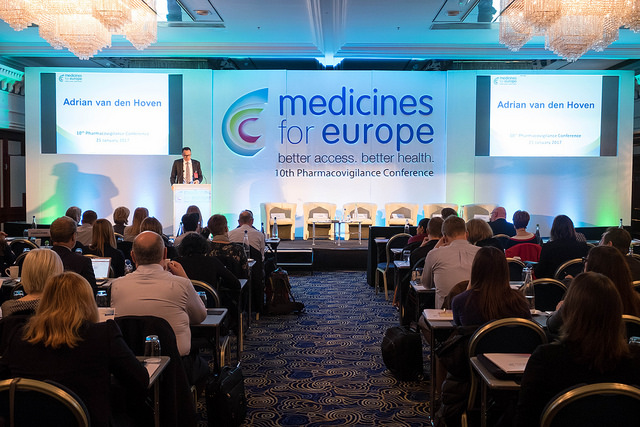 National authorities, regulators, industry leaders and pharmacists gathered in London this week to discuss how to improve patient access to safe medicines with an effective pharmacovigilance policy. This 10th edition of our Medicines for Europe conference highlighted how, if steered appropriately, technology and social media could strengthen the pharmacovigilance system.
Participants also reviewed experience gained in the implementation of EU pharmacovigilance legislation and underlined the need to optimise the use of regulatory and industry resources by applying a risk based approach. The conference called for more efficient distribution of educational material to patients and healthcare professionals. Cooperation between Industry and regulators should ensure that changes to signal detection processes do not lead to unnecessary duplication of work on both sides.
Adrian van den Hoven, Medicines for Europe Director General commented: “10 years of close cooperation between industry and regulators has led to a vastly improved pharmacovigilance system for European patients and healthcare professionals. New IT tools now need to become a big part of our cooperation to build an even better system over the next decade”.